Article: Can You Install Wallpaper Over Wallpaper?
Can You Install Wallpaper Over Wallpaper?
Can New Wallpaper Be Installed Over Old Wallpaper?
In many cases, yes—you can install new wallpaper over existing wallpaper. However, the success of the project depends on the condition of the existing wallpaper, the type of material already on the wall, and how well it is adhered to the surface beneath.
If the existing wallpaper is smooth, firmly attached, and free from damage, applying a new layer can save time and avoid the mess of a full removal project. If it's peeling, heavily textured, damaged, or installed in multiple layers, removing it first will usually deliver better long-term results.
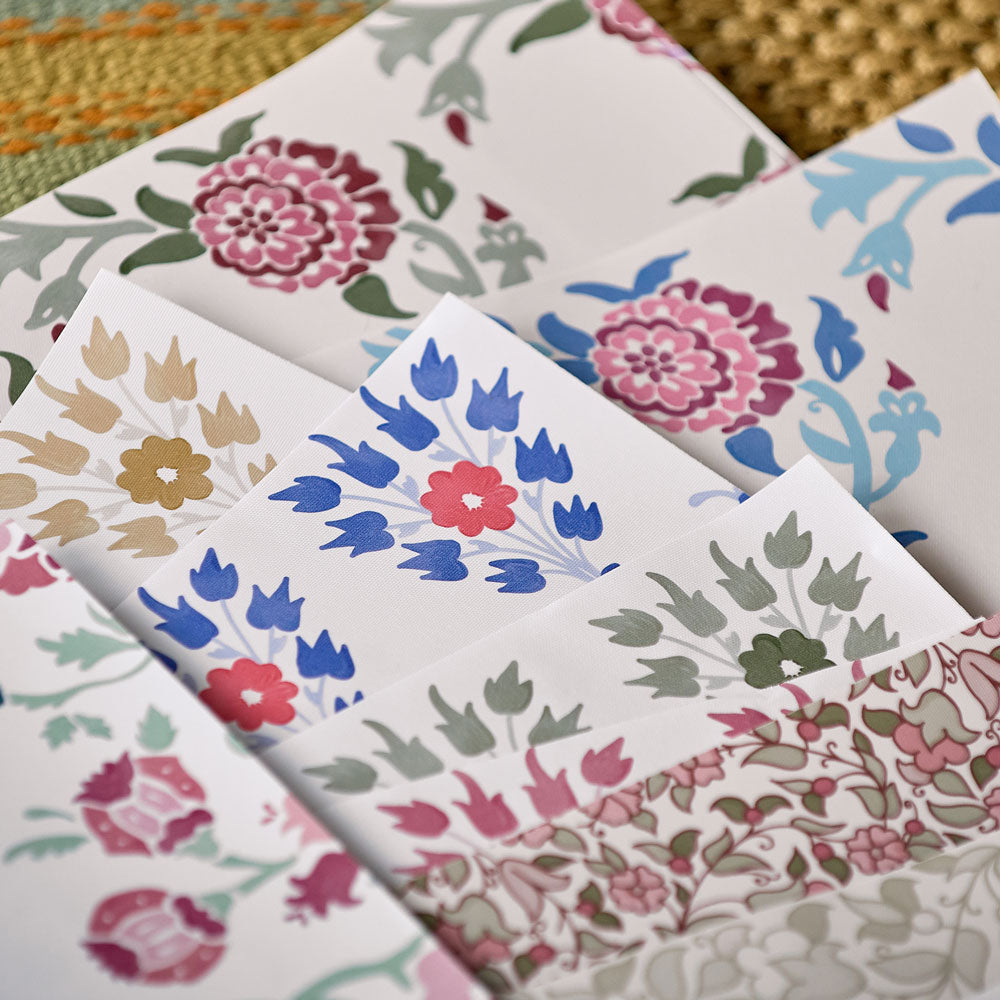
Before committing to a full room, we always recommend ordering a wallpaper sample. Seeing the colour, scale and texture in your own home is the easiest way to make a confident decision before starting your project.
Considering Wallpaper For Your Own Home?
Order samples to compare colours, patterns and textures in your space before committing to a full wall.

Factors to Consider When Wallpapering Over Old Wallpaper
1. How Many Layers Of Old Wallpaper Are There?
When considering wallpapering over old paper, investigate the wall's history. Multiple layers can harbor mold and bacteria, jeopardizing health and your project's durability.
Inspect inconspicuous areas for multiple layers. Use a utility knife to make a small incision. If you discover more than one layer, it's usually best to strip and remove them entirely. Addressing hidden layers ensures a safer, more robust foundation for your wallpaper, promoting a longer-lasting and healthier living space.

2. What Coating Did The Old Wallpaper Have?
Wallpapering over different surfaces depends heavily on material types. Breathable wallpaper, like paper and fabric woven types, offers an even, porous base, facilitating better adhesion for new wallpaper.
In contrast, shiny non-woven wallpapers, especially vinyl wallpaper, with their rigid, less permeable texture, pose challenges. A heavily coated wallpaper resists moisture and can prevent proper adhesion. To check, dampen a small section with water—if it darkens, it's likely woven. If water beads up, it's coated or vinyl, which may require removal.

3. What’s The Condition Of The Old Wallpaper?
When wallpapering over old wallpaper, a flat surface, free from bumps and cracks, is always recommended. Uneven textures, damaged sections, or loose seams compromise adhesion and appearance. Check edges carefully; if loose, they won't support a new layer.
Ideally, choose a thicker wallpaper. It helps conceal minor imperfections on the underlying surface, creating a flawless finish. This enhances the aesthetic outcome and ensures a more forgiving application and better adhesion.

4. What’s The Condition Of The Wall Beneath The Wallpaper?
Thoroughly examining the wall beneath the old paper before starting is essential. Previous wallpaper might have masked underlying imperfections or damage. Investigating ensures you address issues like cracks, holes, moisture stains, or uneven surfaces, preventing hidden flaws from surfacing later.
Uncovering and repairing any issues beforehand guarantees a more stable foundation. This might involve light sanding, fixing damaged drywall or wood paneling, and ensuring any underlying paint is fully cured. These steps enhance your new wallpaper's longevity and maintain a pristine appearance.

5. What’s The Color Of The Old Wallpaper?
When applying new wallpaper over an older layer, be clever with color choices. Bold or dark colors beneath lighter wallpaper may show through, altering the intended hue.
For instance, a vibrant red or deep blue under a light, pastel hue might cause visibility issues. Opting for a thicker new wallpaper can mitigate this, providing better coverage to hide the old pattern and minimizing the risk of underlying colors affecting the final aesthetic.

Can Huggleberry Hill’s Peel & Stick Wallpaper Be Installed Over Old Wallpaper?
Huggleberry Hill's peel-and-stick wallpaper is an excellent solution for concealing old wallpaper due to several key attributes:
Thick: Its thick, luxurious fabric finish camouflages slight imperfections on the underlying surface, providing a seamless appearance.
Breathable: The woven, slightly textured surface promotes breathability, preventing moisture accumulation and safeguarding against mold.
Lightweight: Its lightweight nature ensures secure adhesion without pulling on the surface underneath, guaranteeing longevity.
Excellent Adhesion: The high-quality adhesive provides a strong bond, ensuring the wallpaper adheres securely to various surfaces, including old paper, woven wallpaper, cured paint, or primed wood.
Rich Inks: Printed with high-pigment inks, the new design is vibrant, effectively covering underlying patterns or colors.
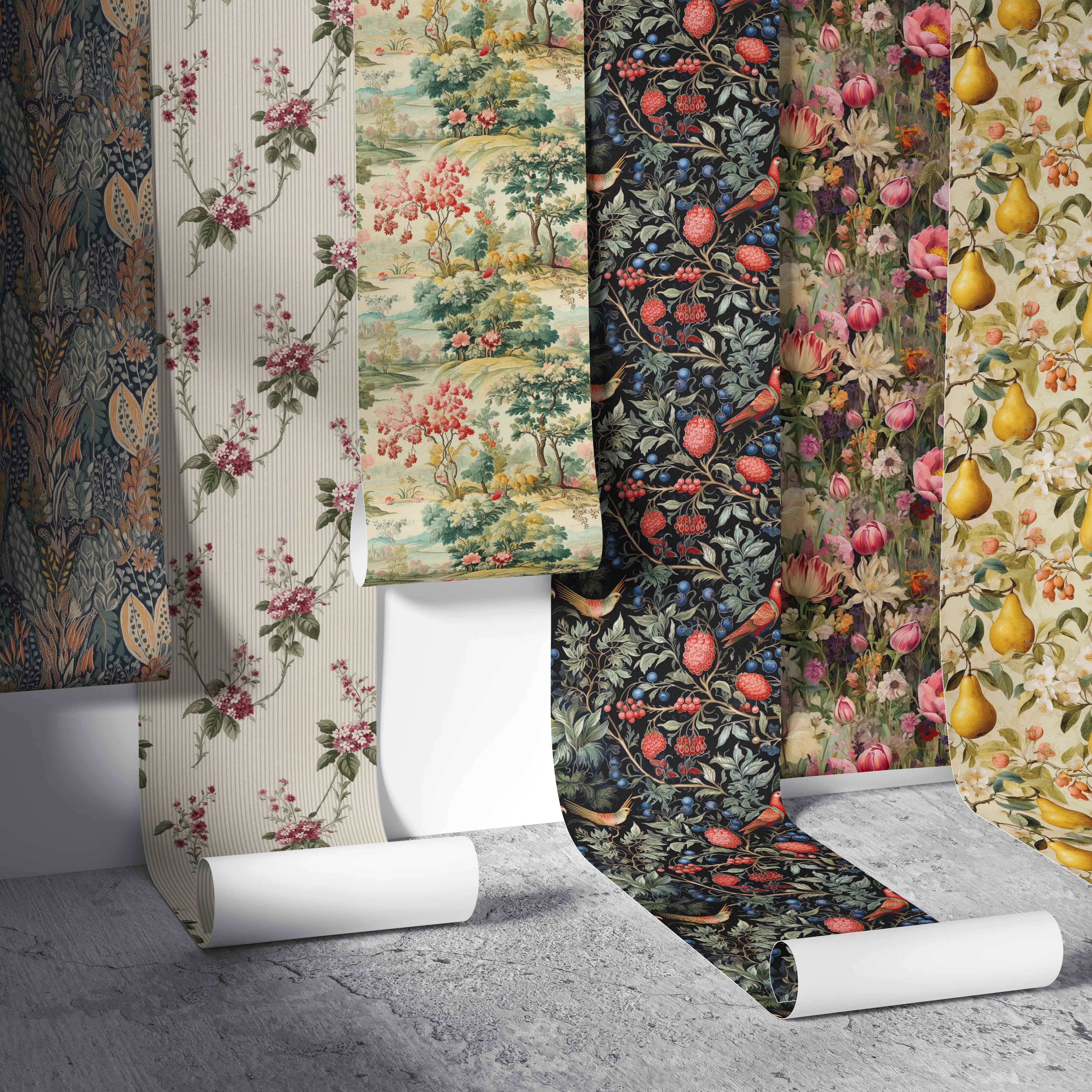
Design Tip: For living rooms or bedrooms, our heritage eclectic collections offer a calm, grounded feel. Their textured look pairs beautifully with natural wood accents and soft, complementary paint colors.
How To Install Wallpaper Over Wallpaper
Materials & Prep Work
Ideally, install new wallpaper over paper or woven wallpapers that are in excellent condition, free of damage or underlying wall issues. To prepare, wash walls with a mild soap solution or sugar soap to remove grease and dirt. This ensures an even and successful application.
Gather the following tools before you begin:
Sharp Cutting Blade: For clean, accurate cuts.
Tape Measure or Laser Level: Essential for precise measurements and straight application.
Wallpaper Smoother or Squeegee: Removes air bubbles and creases for a flat finish.
Seam Roller and Seam Sealer: A seam roller presses edges firmly; seam sealer can be used for stubborn joints.
Straight Edge or Metal Ruler: Guides precise cutting around outlets, trim, or uneven ceilings.
Cleaning Supplies: Soft brush, sponge, and mild soap for surface prep.
Ladder: For access to higher wall sections.
Clean and Dry Hands: Essential for handling wallpaper without smudges.
Note: If applying near baseboards or crown molding, ensure adjacent wood or paint is fully dry and clean for proper adhesive stick.
The Process
This user-friendly guide will help you confidently install Huggleberry Hill's wallpaper over your old one:
Find a Level Starting Point: Identify a level spot on your wall for straight, aligned wallpaper application.
Peel Off the Backing: Peel approximately 10 inches (20 centimeters) of the paper backing from the top.
Apply to the Wall: Place the wallpaper at the top of the wall on the level spot. Press it down gradually in 10-inch (20-centimeter) sections, peeling off more backing as you go. This prevents air bubbles and allows repositioning within 24 hours.
Work Out Bubbles: Use a wallpaper smoother to achieve a flat finish and eliminate air bubbles.
Add the Next Panel: Unlike traditional peel-and-stick wallpaper, peel-and-stick doesn't require overlapping. Place the second panel alongside the first, ensuring seams meet perfectly.
Secure the Seams: Gently roll along the seams to ensure they lay completely flat against the wall.
Repeat the Process: Continue steps 1-6 until the entire wall is covered.
Trim Excess Material: After all panels are in place, trim any extra material at the bottom for a level appearance. Cut carefully around light switches, sockets, and adjacent wood trim or paint lines.
Final Press: Ensure a secure bond by using a clean, soft cloth for a final press. Repeat after 2 days and again after 2 weeks for long-lasting adhesion.
Frequently Asked Questions
Can I apply wallpaper over heavily textured walls?
It is generally not recommended to apply wallpaper directly over heavily textured walls. The texture will likely show through, and adhesive may not bond properly. Smooth the wall with a skim coat, let it dry, and apply primer or paint before hanging new wallpaper.
What if the old wallpaper is painted over?
If old wallpaper has been painted over, assess the paint's condition. If chipping or peeling, remove it. If the paint is in excellent condition and fully cured, treat it like a standard painted wall. However, adding another layer adds weight, which could cause the original paper to pull away.
Should I paint the wood trim before or after wallpapering?
We recommend updating paint on wood trim, baseboards, and crown molding before your wallpaper project. Allow paint to cure completely (often 2 to 4 weeks) so painter's tape or wallpaper adhesive doesn't damage the fresh finish.
How do I know if my interior walls are ready for peel-and-stick wallpaper?
Your interior walls are ready when clean, dry, and structurally sound. Whether applying over old paper, bare drywall, or fresh paint, the surface must be free of dust and debris. Always test a small sample first to ensure the adhesive bonds well with your specific wall conditions.
Ready to transform your space?
Whether you're covering existing wallpaper or starting from scratch, choosing the right design is just as important as preparing the surface.
Explore our wallpaper collections or order samples to experience the colour, scale and texture in your own home before committing to a full room.